6 Ways a High-Performance Research System Accelerates Elastography Breakthroughs
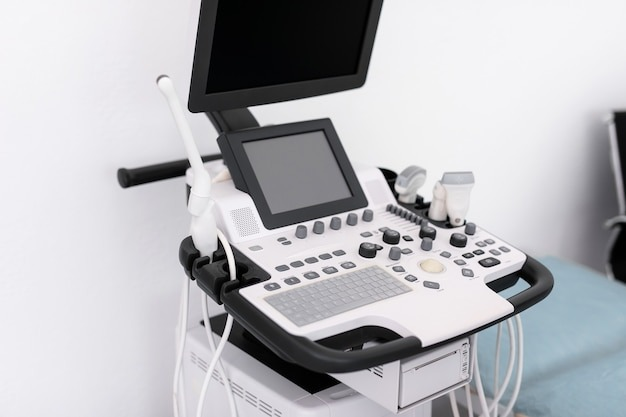
A Shear Wave Research System accelerates tissue elastography breakthroughs by giving researchers open access to raw RF channel data, programmable acoustic radiation force impulse (ARFI) push sequences, and ultra-high-frame-rate plane wave tracking. This software-defined flexibility eliminates traditional clinical hardware bottlenecks, enabling precise quantification of tissue stiffness biomarkers.
Key Takeaways:
- Open Architecture: Eliminates “black box” constraints by providing raw RF data access.
- Sequence Customization: Enables tailored ARFI pushes across variable tissue depths.
- Ultra-High Frame Rates: Captures transient shear waves moving at micro-scale speeds.
- Multi-Modal Synergy: Integrates seamlessly with custom ultrasound transducers for specialized research.
Ultrasound tissue elastography has transformed how non-invasive mechanical profiling is conducted. By measuring shear wave propagation speed, researchers can quantify tissue stiffness markers with extreme accuracy. This methodology is critical for early chronic disease detection and monitoring therapeutic responses.
However, standard clinical scanners restrict access to underlying acoustic parameters. Advancing this field requires specialized hardware that allows for deep sequence manipulation. A dedicated research system bridges this gap between raw physics and clinical applications.
This post looks into how high-performance platforms are shifting the paradigm of elastography research.
Why a High-Performance Shear Wave Research System is Vital for Elastography
Traditional diagnostic ultrasound platforms are hardwired for structural B-mode imaging. They lack the specialized power amplifiers required to generate sustained acoustic radiation force pulses. Without this specific hardware capability, inducing measurable shear waves in deep or highly viscous tissues is impossible.
A high-performance research engine provides software-defined control over every transducer element. This flexibility allows engineers to synchronize push pulses with ultra-high-frame-rate tracking sequences. This unlocks the ability to observe transient mechanical waves in real time.
Furthermore, these systems easily adapt to non-standard experimental environments. Researchers can develop proprietary tracking algorithms without encountering proprietary firmware barriers. This makes a premium research platform the foundational cornerstone when it comes to engineering next-generation diagnostic tools.
The 6 Ways a High-Performance Research System Can Speed Up Elastography Breakthroughs
With the importance of a high-performance research system in elastography out of the way, let’s now focus on the six ways the system actually accelerates elastography breakthroughs:
1. Open Architecture and Raw Channel Data Access
Most clinical ultrasound systems function as a closed “black box” environment. A premium research platform provides unfettered access to pre-beamformed radiofrequency (RF) data. This allows researchers to design and test custom post-processing algorithms manually.
Bypassing factory beamformers lets you optimize lateral phase tracking precision. You can implement advanced noise-reduction scripts directly on the raw data matrix. This level of data visibility ensures your mechanical calculations remain uncorrupted by proprietary filtering.
2. Programmable Acoustic Radiation Force Impulse (ARFI) Sequences
Inducing measurable shear waves requires precise control over the acoustic push duration and location. High-performance systems allow you to program custom ARFI push sequences effortlessly. Researchers can modulate individual element transmit focus, power, and apodization profiles on the fly.
This capability is essential when mapping non-homogeneous or highly attenuating tissue structures. You can design multi-focal comb-push sequences to generate complex wave patterns. This precise control over the acoustic field maximizes shear wave generation efficiency.
3. Ultra-High-Frame-Rate Plane Wave Tracking
Shear waves travel through soft biological tissues at nominal speeds of 1 to 10 meters per second. Capturing these transient events requires imaging frame rates exceeding thousands of frames per second. High-performance systems leverage plane wave illumination to achieve these ultra-high frame rates.
By illuminating the entire field of view simultaneously, the system tracks wave propagation continuously. This eliminates spatial aliasing during rapid mechanical displacement events. High-speed acquisition ensures flawless tracking of the wavefront across your entire region of interest.
4. Broad Compatibility with Custom Ultrasound Transducers
Advanced elastography research frequently requires specialized acoustic geometries for unique anatomical targets. A high-performance research engine provides universal connectivity to drive Custom Ultrasound Transducers. This prevents your laboratory from being locked into restrictive, single-vendor hardware ecosystems.
Whether utilizing high-density matrix arrays or row-column configurations, the system scales smoothly. It manages the impedance matching needed to safeguard specialized elements during long high-power transmissions. This hardware adaptability lets you pivot your research focus without replacing your underlying platform.
5. Multi-Frequency and Viscoelastic Profiling Capabilities
Biological tissues are inherently viscoelastic, meaning their mechanical properties change based on wave frequency. A premium Shear Wave Research System enables multi-frequency wave excitation across a wide bandwidth. This allows investigators to analyze phase velocity dispersion curves accurately.
By evaluating how wave speed changes across frequencies, you can separate elasticity from viscosity. This dual characterization is vital for differentiating complex pathologies like hepatic inflammation from fibrosis. Accessing these advanced parameters unlocks deeper diagnostic insights into tissue degradation.
This is an effective feature that makes High-Performance Research System stand out from standard clinical practices. What are some of the other key differences between the two? Let’s look into them:
| Performance Feature | Standard Clinical Platform | High-Performance Research System |
| Data Accessibility | Post-processed B-mode frames | Pre-beamformed, raw RF channel data |
| Transmit Flexibility | Fixed, factory-locked push profiles | Programmable multi-focal ARFI push vectors |
| Tracking Frame Rate | Standard diagnostic rates (30-60 Hz) | Plane wave tracking (10,000+ Hz) |
| Transducer Options | Proprietary clinical catalog | Seamless support for Custom Ultrasound Transducers |
Table 1. Structural Comparison of Conventional vs. High-Performance Elastography Platforms
6. Seamless Integration with Multi-Modal Synchronization
Modern biomedical engineering labs rarely rely on a single isolated modality. Advanced shear wave research often occurs alongside synchronized optical or magnetic resonance tracking setups. High-performance systems incorporate low-jitter external hardware triggers to ensure microsecond-level clock alignment.
This precision gating prevents therapeutic push pulses from disrupting external data digitizers. It allows for the clean interleaving of ultrasound pushes with secondary sensor acquisitions. True hardware synchronization simplifies complex multi-modal experimental workflows significantly.
Final Thoughts
High-performance shear wave research systems remove the engineering barriers built into closed clinical scanners. By providing open software programming and high-speed data capture, these platforms empower laboratories worldwide to discover highly reliable mechanical biomarkers.
Elevate Your Tissue Elastography Workflows
Discover the future of non-invasive mechanical profiling by exploring advanced software-defined ultrasound technology. Select an open-architecture platform that natively supports high-power pulse sequences and accommodates specialized array configurations.