10 Things You Must Know Before Getting Laser Hair Removal for Dark Skin
Laser hair removal can be safe and effective for dark skin when the right laser technology is used. Understanding your skin type, choosing an experienced practitioner, and following proper aftercare can help you achieve smooth, long-lasting results while minimising the risk of pigmentation issues.
Key Takeaways:
- Choose Nd:YAG technology for safer treatment on darker skin tones.
- Always get a patch test before starting full treatment.
- Shave, don’t wax between sessions to ensure the laser can target the hair follicle effectively.
Unwanted hair can be frustrating. Many people with darker skin tones often wonder if laser treatment is safe for them. The good news is that modern laser technology has made laser hair removal for dark skin much safer and more effective than it was in the past.
Getting the wrong laser on darker skin can cause burns, patchy pigmentation, or worse – you spend money and see zero results. This guide covers what actually matters, so you walk in prepared.
What You Must Know Before Choosing Laser Hair Removal
Here are 10 vital things you must know to get smooth results without risking your skin.
1. Not All Lasers Are Safe For Dark Skin
This is the big one. Most standard lasers target the contrast between light skin and dark hair. Older technology struggled to differentiate dark hair from dark skin.
The Nd:YAG laser is one of the safest and most effective options for laser hair removal for dark skin. It has a longer wavelength that can target hair follicles without damaging the surrounding skin. Always ask the clinic which laser they are using, and if you are not satisfied with their answer, just walk away.
2. Know Your Fitzpatrick Skin Type
The Fitzpatrick Scale is a numerical system that categorises different skin types based on their response to ultraviolet (UV) light. It ranges from Type 1 (lightest and most sun-sensitive) to Type 6 (darkest and least sun-sensitive). Dark skin typically falls into Types IV to VI. Here’s a quick breakdown:
| Fitzpatrick Type | Description | Laser Risk Level |
| IV | Olive/light brown skin | Moderate |
| V | Brown skin, rarely burns | Higher |
| VI | Dark brown to black skin, never burns | Highest |
Melanin in the epidermis acts as a chromophore, absorbing more laser energy and increasing the risk of adverse events from epidermal injury in those with darkly pigmented skin. It is beneficial for the practitioner if they know your type. This helps them choose the right settings.
3. Hyperpigmentation Is A Real Risk
Post-inflammatory hyperpigmentation or PIH is a major concern for dark skin. There is a chance that your skin will be left with dark patches after the treatment
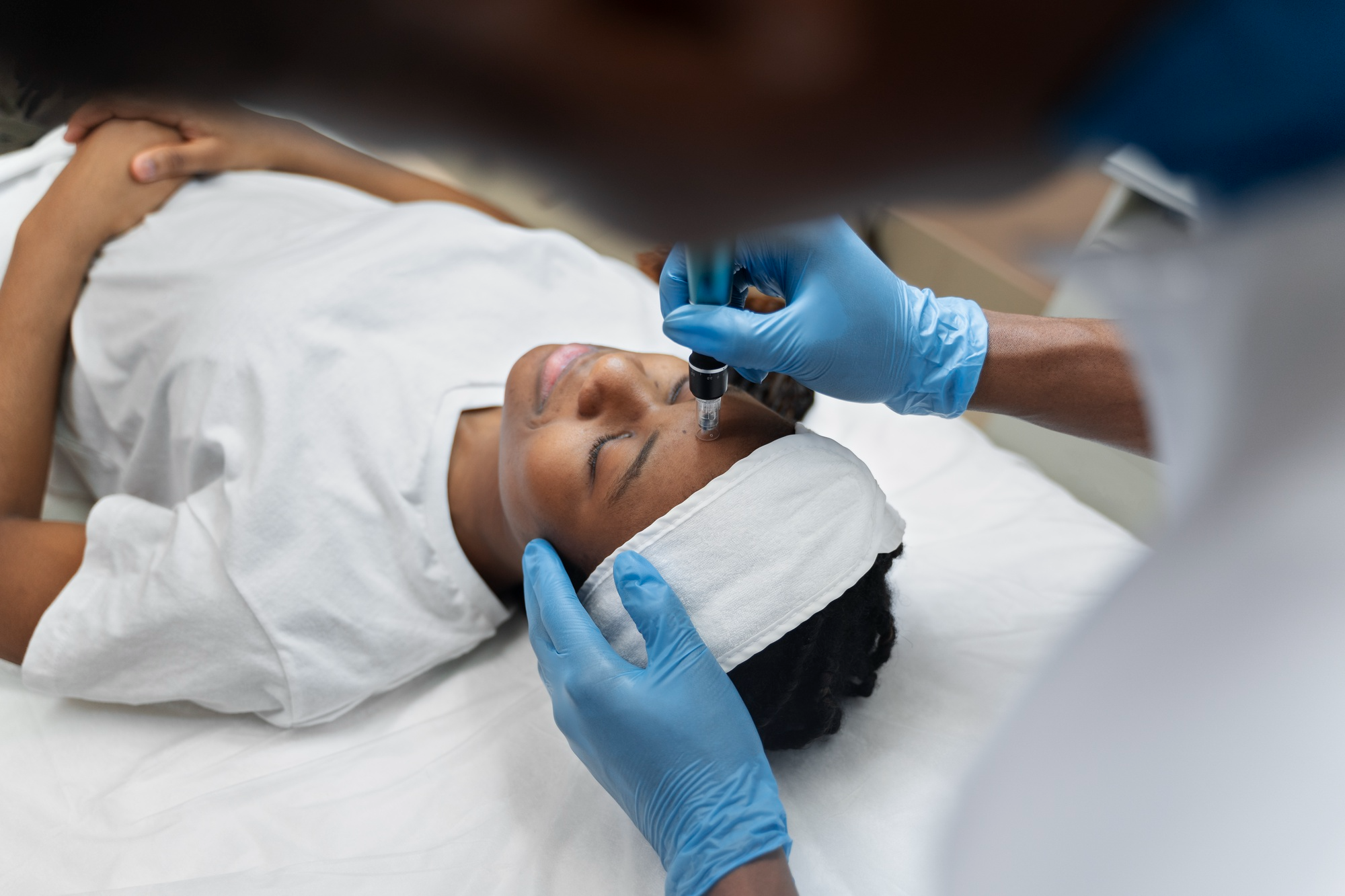
Pre and post-treatment with bleaching agents like hydroquinone cream often reduces the risk of post-inflammatory hyperpigmentation. A good clinic will discuss these matters with you upfront and suggest treatment plans like microneedling facials.
4. You Will Need More Sessions
This is how laser hair removal for dark skin works. You might need up to ten treatments if you have IV, V, VI type skin. So, budget your time and money accordingly. Stay clear of clinics that promise fast results in just two to three sessions for dark skin tones.
5. Ipl Is Not The Same As Laser
A lot of clinics offer IPL (Intense Pulsed Light) as a cheaper alternative. IPL is not laser hair removal. For dark skin, IPL carries a significantly higher risk of burns and pigmentation problems.
A basic laser machine can only treat a light skin with dark hair combination. Always clarify whether the clinic is using true laser technology – specifically Nd:YAG or a diode laser designed for darker skin.
6. A Patch Test Is Non-Negotiable
Never skip the patch test. For dark skin especially, a patch test helps identify how your skin responds before full treatment begins.
At a reputable clinic, an initial consultation including a patch test is standard practice and that’s exactly the kind of diligence that protects your skin.
7. Sun Exposure Before And After Treatment Matters
Recently-exposed to sun or tanned skin are at a higher risk of uneven pigmentation and burns during the treatment procedure. You should avoid sun exposure for at least two weeks before the session.
Use SPF 30 or higher daily, especially on treated areas and avoid self-tanner for several weeks before your session.
8. Shaving – Not Waxing – Between Sessions
During your laser hair removal course, you must shave between sessions, not wax, thread, or pluck. Waxing removes the hair root. Laser works by targeting the pigment inside that root. No root means no result.
Moreover, shaving between the sessions helps with the treatment procedure. Hairs that have been shaved too far in advance will be too long and the laser will have difficulty hitting the follicle. Shave one to two days before your session, not the morning of.
9. Laser Removes Hair – Electrolysis Removes It Permanently
Laser hair removal reduces hair growth significantly often by 80–90%. However, it cannot guarantee permanent hair removal for all skin tones and skin types.
Electrolysis, on the other hand, is the only hair removal method approved by the FDA as truly permanent. It works on all skin tones and all hair colours, including grey and fine hair that lasers cannot target.
If you are looking for a permanent solution, especially for the face, electrolysis may actually be the better fit. At Carly Parker Electrolysis (Bristol and Cheltenham), electrolysis is a specialism, not an afterthought.
10. Consider A Microneedling Facial Alongside Your Treatment Plan
Dark skin is more prone to scarring and pigmentation issues. Adding microneedling facials in between laser sessions can help maintain skin health.
Microneedling boosts collagen production, helps with hyperpigmentation and smooths uneven texture. Moreover, it improves your overall skin tone.
Wrapping Up
Modern technology has transformed laser hair removal for dark skin. The treatment is no longer limited to lighter skin tones. Success depends on choosing the right laser, working with experienced professionals, and following proper preparation and aftercare.
Always look for expert clinics that provide tailored skin solutions, from advanced hair removal to target treatments like a microneedling facial, ensuring your skin remains healthy, bright, and completely safe.