Flooring for the Kitchen: Which is Better, Marble or Granite?
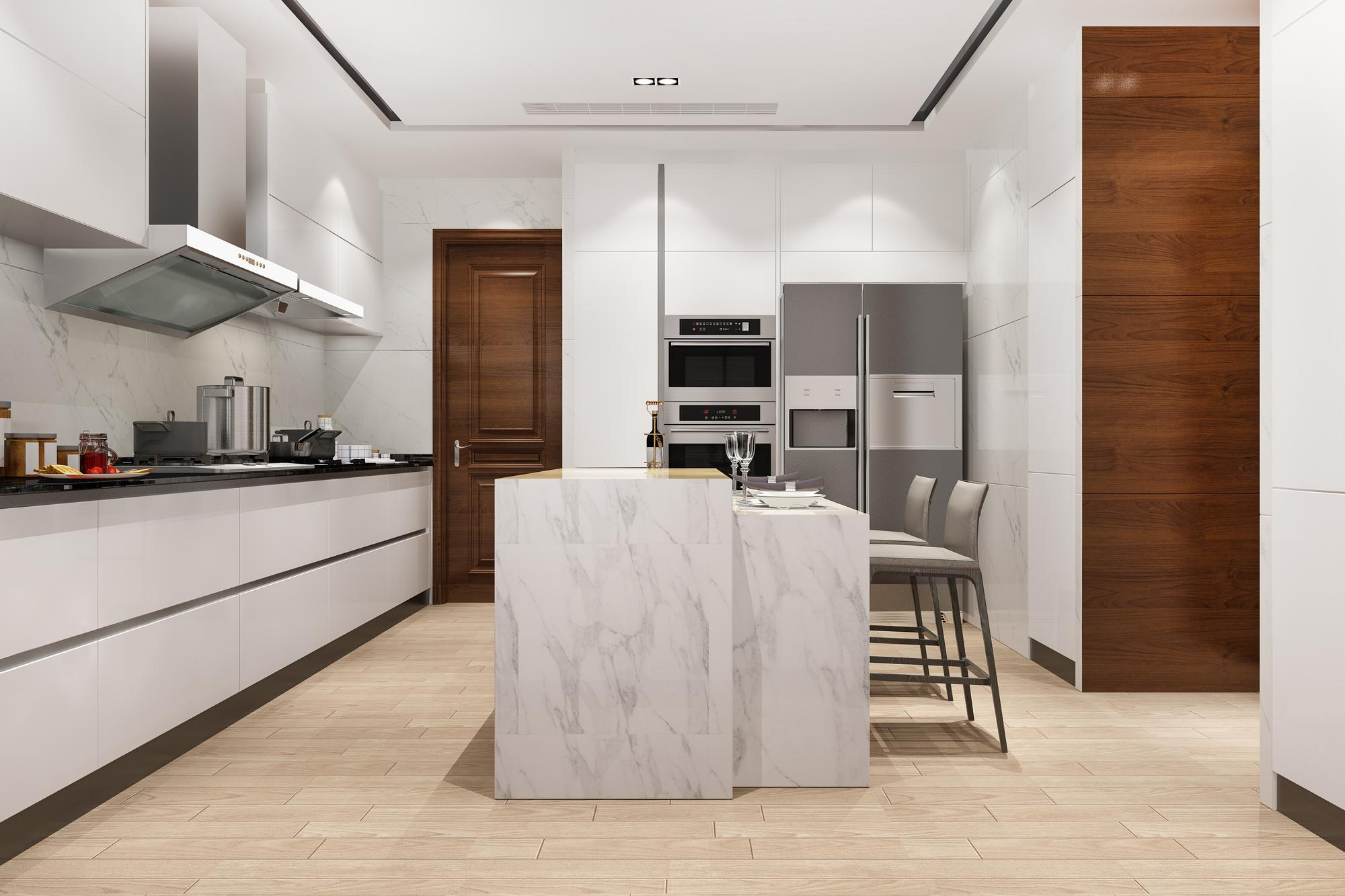
Whether you are choosing marble or granite for kitchen flooring, the choice should be made by keeping the aspects, like durability, functional resilience, and uncompromising luxury, in mind.
Key Takeaways
- Imported marble offers a luminous, seamless luxury that expands spaces, while granite provides a grounded, granular look.
- Ditching slippery, polished gloss for satin-matte honed or textured leather finishes is crucial to mask scratches and etching easily.
- Hydrophobic nano-sealants create an invisible barrier, shielding marble from tough kitchen stains like oil and turmeric
Both marble and granite are natural, quarried stones used in construction and design. While granite is ultra-durable, marble is comparatively softer and admired for its classic appearance.
While choosing the suitable material for your kitchen flooring, you need to evaluate the key features of granite and marble, and decide accordingly to uphold the luxury with resilience.
Why Must Visual Philosophy And Trendy Design be Seamless?
To establish the vibe, improve spatial harmony, matching the stone’s visual philosophy and design is important.
Seamless Luxury vs. Granular Patterns
While imported marbles can offer you a dramatic and luminous depth in your kitchen flooring, making the space look airy, expansive, and ultra-premium, kitchen granite creates a visually busier pattern with visible grout lines.
| Features | Imported Marbles | Granites |
| Visual Character | Flowing veins, book match options. | Granular, speckled, uniform tone. |
| Spatial Effect | Maximizes light, makes the space expansive. | Grounded, intense, and darker tone. |
| Design Flexibility | High (can be carved seamlessly) | Moderate (rigid cutting profile) |
What Are The Finishes and Maintenance Strategies Suitable for Kitchen Flooring?
The ideal kitchen flooring has to balance moisture resistance, durability, and underfoot comfort.
Why Polished Gloss is Out for Kitchen Floors
Polished gloss might be suitable for marble floor design for the home, but it is falling out of favor for kitchen flooring due to safety hazards, as it can become highly slippery with soapy water on the surface, and is highly prone to micro-scratches, high maintenance, and impracticality.
What to use instead:
- You can use a honed finish, which is a smooth and satin-like matte surface that easily hides scratches.
- To mask etching and provide excellent traction, you can use a leathered or brushed finish that follows the natural vein of the stone.
Modern Hydrophobic Nano-Sealants
Modern hydrophobic nano-sealants utilize advanced nanotechnology to create ultra-thin and invisible barriers that repel liquids, dirt, and oils.
Why people consider it a game-changer:
- penetrating barrier that completely blocks water and oils.
- It doesn’t cause a stain on the floor by the spill of turmeric or citrus, which gives you hours to wipe them away.
Which Stone Should You Choose for Your Kitchen Floor?
You need to choose the stone for your kitchen flooring according to your expectations, budget, and the aesthetic of your home.
Marble
This metamorphic rock is appreciated for its timeless elegance, smooth finish, and natural veins for marble floor design for homes.
You can choose premium imported marble if:
- You want a seamless and high-end bespoke aesthetic with unique, dramatic veining.
- You want a luminous and bright ambiance, as marble can make the space appear airy and expansive.
- You are willing to maintain it because marble is naturally softer and more porous than granite, so it can stain from acidic foods like vinegar, lime, or wine and chip from heavy impact.
You can avoid marble if: Advanced sealants plug microscopic stone pores, which creates an invisible, deep-
- Your kitchen faces heavy food prep, dropped dishes, or frequent foot traffic.
- You don’t have time to maintain it.
- If you are tight on budget, you can skip the marble because it is more expensive than granite.
Granite
Granite is a coarse-grained, intrusive, igneous rock praised for its strength, heat resistance, and aesthetic appeal.
You can choose premium kitchen granite if:
- Your kitchen experiences a lot of spills (water, oils, or acidic ingredients) because granite resists stains far better than marble.
- You want to minimize scratches as granite is highly scratch-resistant.
- You want long-term value because a properly sealed granite floor can last for several decades without needing a replacement.
- If you want a cost-effective option, choose granite, as it offers a high-end aesthetic within a tight budget.
When to avoid granite for kitchen flooring:
- Granite is a hard and cold stone, so if you want a soft and warm surface underfoot, avoiding granite is convenient.
Planning to Buy the Best Quality Marble or Granite For Your Kitchen?
If you want to buy marble or granite for your kitchen flooring, purchase from a professional and trusted marble company for the best-quality product.